
Automation and Electrical Engineering

Automation and Electrical Engineering

Research and applied activities in this field focus on developing studies and projects related to electrical systems, control, automation, and intelligent systems, with an emphasis on improving performance and efficiency, developing technological solutions, and integrating advanced technologies into industrial applications.

Laboratory Director

Not specified

2025

Founded

0

Researchers

0

Active Projects

0

Articles

17

Specialities

pages.No active projects for this laboratory.

pages.No articles for this laboratory yet.

Research projects and studies

Research projects and studies

pages.General

We believe that scientific research doesn’t begin with a PHD, it begins much earlier. It starts in childhood, as the foundation for learning how to think critically, develop ideas, and solve real-world problems. By building a strong foundation in research and analytical thinking, students, professionals, and companies alike can learn how to think independently, analyze complex issues, and turn innovative ideas into actionable results. These skills are essential for contributing to meaningful research projects and transforming concepts into tangible realities. **What You Will Learn** 1. How to Choose a Research Project 2. How to Choose Appropriate Research Methods 3. How to Plan and Prepare Research Projects and Studies 4. Scientific Analysis 5. How to Write a Scientific Research Project or Study **Final Project** As you progress through the program, you'll have the opportunity to apply your newly acquired skills by selecting a research topic that aligns with your interests or goals. You will develop your project step by step, with our guidance at every stage. Submit your work as you go, and we will provide constructive feedback to help you refine your approach and improve your outcomes.
Rbiha Salsabil Ketitni · pages.Trainer
Online · 3 · 2
Individual: 20000.00
pages.View Course
Scientific Analysis

Scientific Analysis

pages.General

While the world today is immersed in and fascinated by the applied side of science, where concrete results and practical analysis are visible, most people whether academics or professionals have forgotten or chosen to ignore that the theoretical dimension plays a fundamental role. It is the essential step that enables transition toward the applied aspect through theoretical scientific analysis. Unfortunately, this dimension has become highly marginalized in both academic and professional environments. This training program aims to help you, as an academic or professional, understand and master the methodology of scientific analysis with clarity and precision. **What You Will Learn** 1. The fundamental principles of theoretical and applied scientific analysis. 2. How to apply theoretical scientific analysis to various phenomena and projects. 3. How to extract added value through theoretical scientific analysis. 4. How to develop your initial findings into more precise and innovative results through theoretical analysis. **Final Project** 1. Throughout the training, you will have the opportunity to apply your newly acquired skills by choosing a topic that aligns with your scientific or professional interests. 2. You will develop your project or innovative idea step by step, guided by the Research Laboratory DZ team through each phase of progress. 3. You will submit your work progressively and receive constructive feedback designed to: Improve the quality of your project or research Strengthen your scientific analysis skills.

Rbiha Salsabil Ketitni · pages.Trainer
Online · 4 · 2
Individual: 30000.00
pages.View Course
Interdisciplinary Scientific Relations

Interdisciplinary Scientific Relations

pages.General

At Research Laboratory DZ, we believe that true science emerges from the interaction between disciplines, whether that connection is direct or indirect. For example, there are significant links between Accounting and Sustainable Development, or Biology, yet many people fail to recognize these indirect relationships — and some even deny them, regardless of their high academic or professional status. This training aims to broaden the scientific perspective of academics and researchers, encouraging them to move beyond the narrow mindset of “my field and nothing else.” Such a restricted approach represents intellectual stagnation and is one of the key indicators of societal and scientific regression. **What You Will Learn** 1. Understanding the importance of building connections between disciplines. 2. Learning how to select topics that involve interdisciplinary relationships. 3. Mastering the different levels of interdisciplinarity: from direct to complex, indirect relationships. 4. Identifying added value within a field or project through cross-disciplinary integration. 5. Developing a higher level of innovation and creativity through interdisciplinary thinking. **Practical Component** You will be guided by the Research Laboratory DZ team throughout the practical part of the training. 1. Participants will work on two projects: A topic directly related to your field of specialization. A topic indirectly related to your field. **Note:** You may freely choose your topics according to your interests. If you face difficulties selecting an indirect relationship topic, the project committee will assist you. **Follow-up and Evaluation** Throughout the program, the supervisory team will monitor your progress closely to help you enhance your analytical and research skills, and to move beyond the mindset that “there is no link between disciplines. If you achieve innovation or added value through your work, the project team will continue collaborating with you to implement your results within research laboratories or partner companies.

Rbiha Salsabil Ketitni · pages.Trainer
Online · 5 · 2
Individual: 30000.00
pages.View Course
IBM SPSS

IBM SPSS

pages.General

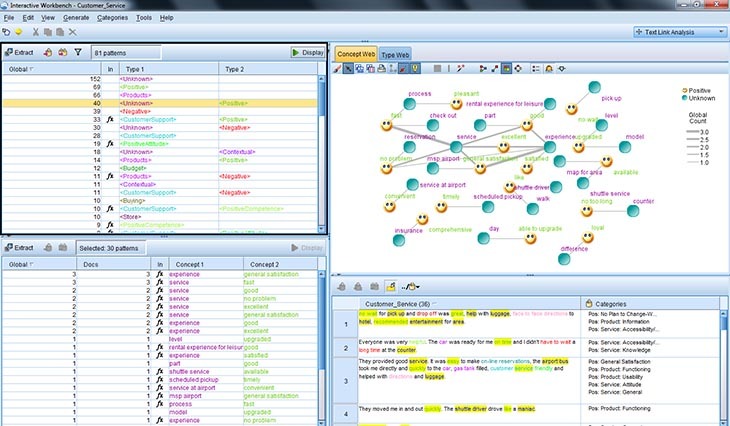
The entire world relies on one fundamental science that is applied everywhere, either directly or indirectly : Statistics. Today, statistics serve as an essential tool for understanding and analyzing phenomena. The IBM SPSS software is widely used in scientific research to analyze study data and derive accurate and objective conclusions. This course aims to equip learners with practical skills in data handling, research design, and statistical analysis. It enhances the quality of scientific research and supports decision-making based on solid scientific foundations. **What You Will Learn** How to scientifically write and design a study or research questionnaire. Methods for formulating effective survey questions. Understanding the interface and uses of IBM SPSS software. Entering, organizing, and processing data statistically. Applying statistical and inferential tests (e.g., mean, standard deviation, etc.). Understanding types of variables and their relationships. Analyzing relationships between variables using simple and multiple regression. Interpreting statistical outputs in a precise research-oriented manner. Preparing charts and graphs to visualize data. **Final Project** Throughout the course, participants will work on a practical project involving the collection of statistical data — starting from questionnaire design and distribution, through data analysis, to identifying new research questions or added value based on output interpretation. Participants will receive continuous guidance from the project team to ensure full proficiency in using the software and linking its results to scientific and research studies.

Rbiha Salsabil Ketitni · pages.Trainer
Online · 3 · 2
Individual: 20000.00
pages.View Course
Research Data Simulation

Research Data Simulation

pages.General

In both academic and professional settings, research and studies often rely on data provided by companies or institutions. However, such data can sometimes be sensitive, confidential, incomplete, or inaccurate. In many cases, interns and researchers are given incorrect or simplified datasets intended solely for training purposes. This workshop aims to equip participants with the ability to reconstruct digital reality based on observation and field analysis, by generating simulated datasets that closely reflect the real behavior of a company or professional environment. **What You Will Learn** Understanding the concept and importance of simulation in scientific research. Designing a virtual database that reflects real-world contexts. Generating simulated data using statistical analysis tools. Analyzing and interpreting results scientifically. Documenting the research process with transparency and ethics. **Final project** Throughout the training, participants will apply the acquired skills in practice by conducting a scientific study that requires working with research data. During this process, they will learn how to generate, analyze, and apply digital data in a rigorous and scientific manner, enabling them to simulate real-world research conditions and translate theoretical knowledge into practical outcomes.

consultant · pages.Trainer
Online · 4 · 2
Individual: 35000.00
pages.View Course
Risk Management

Risk Management

pages.General

Risk management is a systematic process aimed at identifying potential risks, analysing their likelihood and impact, and developing appropriate strategies and measures to address them and minimise their consequences. It enables organisations and projects to make more effective decisions and achieve their objectives in a more controlled environment. **What You Will Learn** The training covers the fundamental and practical aspects of risk management, including: • Risk management concepts and their importance for organisations and projects. • Identification and classification of risks according to their nature and source. • Risk analysis, including potential causes and impacts. • Assessment of risk likelihood and potential impact. • Preparation and interpretation of a Risk Matrix. • Risk prioritisation and ranking according to their level of severity. • Risk response and treatment strategies. • Development of risk prevention and mitigation measures. • Risk monitoring and follow-up throughout the project life cycle. • Preparation and updating of a Risk Register. • Integration of risk management into planning and decision-making. • Use of practical tools and techniques to support the risk management proces**s. Throughout the training, participants will study practical examples and case studies and regularly solve practical problems and exercises to apply the knowledge acquired. **Practical and Final Project** At the end of the training, each participant will complete an individual practical project in which they will apply risk management methodologies and tools to a topic or project of their choice.

consultant · pages.Trainer
Online · 4 · 2
Individual: 34900.00
pages.View Course
Python

Python

pages.General

Python is a versatile and widely used programming language known for its simplicity and readability. It is commonly used for software development, data analysis, automation, web development, artificial intelligence, machine learning, and solving technical and scientific problems. **What You Will Learn** • Python fundamentals, syntax, variables, data types, and operators. • Conditions, loops, functions, and data structures. • Problem-solving and computational thinking. • Data processing and basic data analysis. • File handling and task automation. • Using Python libraries for practical applications. • Debugging and improving Python programs. **Practical and Final Project** Throughout the training, participants will solve practical problems and complete hands-on exercises. At the end of the training, each participant will complete an individual project applying Python to a topic or problem of their choice.

consultant · pages.Trainer
Online · 4 · 2
Individual: 35000.00
pages.View Course
Therapeutic Communication between the Speech Therapist and the Patient

Therapeutic Communication between the Speech Therapist and the Patient

pages.General

Therapeutic communication between the speech therapist and the patient is a professional process aimed at building a therapeutic relationship based on trust, respect, and mutual understanding. It helps the speech therapist better understand the patient’s needs and adapt their communication throughout the assessment and treatment process. **What You Will Learn** • Understanding the principles and importance of therapeutic communication in speech therapy. • Building an effective therapeutic relationship between the speech therapist and the patient. • Developing active listening and effective questioning skills. • Using verbal and non-verbal communication effectively during therapy sessions. • Adapting communication to the patient’s age, abilities, and needs. • Communicating with patients experiencing communication or speech difficulties. • Building patient confidence and encouraging active participation in therapy. • Managing difficult situations and misunderstandings during sessions. • Communicating effectively with parents and caregivers when necessary. • Applying professional and ethical principles in the therapeutic relationship. **Practical and Final Project** Throughout the training, participants will analyse different therapeutic situations and case studies and regularly complete practical exercises to develop their communication skills. At the end of the training, each participant will complete an individual practical project involving the analysis of a communication case or situation in speech therapy and the development of appropriate communication strategies.

consultant · pages.Trainer
Online · 2 · 1
Individual: 30000.00
pages.View Course
Excel  from A to Z

Excel from A to Z

pages.General

Excel from A to Z** is a comprehensive training designed to develop participants’ skills in using Microsoft Excel, from basic data organization and formatting to formulas, data analysis, visualization, and advanced tools. The training focuses on practical applications that can be used in professional, research, and everyday tasks. ### What You Will Learn • Understanding the Excel interface and basic spreadsheet operations. • Entering, organizing, and formatting data effectively. • Using formulas and functions for calculations and data processing. • Sorting, filtering, and managing large datasets. • Creating charts and visualizations to present data clearly. • Using PivotTables to summarize and analyze data. • Identifying patterns and trends within datasets. • Using advanced Excel tools to improve analysis and reporting. • Applying Excel to professional and research-related tasks. ### Practical and Final Project Throughout the training, participants will work with practical datasets and complete exercises to develop their skills in organizing, analyzing, and presenting data. At the end of the training, each participant will complete an individual practical project involving the creation of a structured Excel file, data analysis using appropriate formulas and tools, and presentation of the main results.

consultant · pages.Trainer
Online · 2 · 1
Individual: 25000.00
pages.View Course
Supply Chain Management: Concepts, Practice & Research

Supply Chain Management: Concepts, Practice & Research

pages.General

Supply Chain Management: Concepts, Practice & Research is a practical training designed to introduce participants to the key principles of supply chain management and their application in real-world business environments. It combines theoretical concepts with practical cases and research approaches to help participants understand how supply chains are planned, coordinated, analyzed, and improved. Practical and simulation-based learning can strengthen understanding of supply chain concepts and decision-making. **What You Will Learn** • Understanding the fundamental concepts and principles of supply chain management. • Exploring the main components of a supply chain, from suppliers to customers. • Understanding procurement, inventory, logistics, transportation, and distribution processes. • Analyzing supply chain performance and identifying areas for improvement. • Understanding the role of information and coordination in supply chain decisions. • Applying supply chain concepts to real-world business cases. • Exploring research methods and approaches used in supply chain management. • Analyzing supply chain challenges, risks, and opportunities. • Developing practical decision-making and problem-solving skills. **Practical and Final Project** Throughout the training, participants will work on practical exercises, case studies, and real-world supply chain scenarios to develop their analytical and decision-making skills. At the end of the training, each participant will complete an individual practical project involving the analysis of a supply chain case, identification of key challenges, and development of appropriate improvement strategies.

consultant · pages.Trainer
Online · 4 · 2
Individual: 35000.00
pages.View Course
Effective Communication with Students

Effective Communication with Students

pages.General

For the receiver (student or patient) to interact effectively with the sender (teacher or doctor) and for the dialogue to produce a meaningful outcome, both parties must possess communication skills. This skill cannot be measured by how easy or difficult it is, but rather by one’s ability to manage their way of speaking and expressing ideas. Some people naturally have this talent; however, reality shows that there are still higher levels of communication we have yet to reach. This makes it necessary to learn and develop this skill continuously, especially for teachers and doctors, as they rely heavily on effective human interaction and communication. **What You Will Learn:** The key elements of communication: sender, receiver, message, and feedback. The use of tone, body language, and eye contact as powerful communication tools. Active listening skills to better understand others. Empathy towards students or patients. Building trust between sender and receiver for effective interaction. Handling difficult situations with composure and professionalism. **Training Implementation** Since our project is based on practical application, we will conduct an individual interview with each teacher or doctor to identify their communication approach. After the interview, the participant will receive specific case scenarios derived from the discussion to analyze and improve their communication skills. During the training, the participant will prepare a weekly summary highlighting: the areas of improvement, and the challenges that remain difficult. In the final stage, a practical session will be organized with a group of students (for teachers) or a group of patients (for doctors). Our team will observe and evaluate their interactions carefully, to assess progress and enhance real-world communication skills.

consultant · pages.Trainer
Online · 4 · 2
Individual: 34900.00
pages.View Course
Language for Academic and Professional Empowerment

Language for Academic and Professional Empowerment

pages.General

Many students and professionals struggle with language-related challenges that affect their academic and career progress. The main reason often lies in studying continuously in one’s mother tongue and then working in another language, or starting university studies in a new, unfamiliar language, or studying abroad in a country with a completely different language. As researchers, our main concern is not with the third group (those studying abroad), but rather with the first and second groups, who study and work in their home country yet face a real linguistic gap between education and professional practice. **What You Will Learn** Academic and professional language and how to use it effectively. Accurate use of key terminology in academic and professional contexts. Clear and coherent idea formulation. Professional vocabulary and expressions specific to each field. Effective communication in the workplace. Public speaking skills with confidence and clarity. **Practical Training** Since our laboratories focus on research and practical application, this course follows the same hands-on approach through several stages designed to develop academic and professional language proficiency: Academic or professional writing: The student or professional writes a lesson, report, or short scientific paragraph. Vocabulary analysis: They identify unfamiliar words and find for each its verb, noun, and adjective forms. Practical usage: They write at least five sentences using each new word in different contexts. Integrated written expression: They compose a short essay or paragraph in which the new words become the key terms of their writing. Review and oral presentation: After scientific committee evaluation, the participant presents their work orally to assess pronunciation, structure, and clarity of expression.

consultant · pages.Trainer
Online · 3 · 2
Individual: 19000.00
pages.View Course
From land acquisition to key handover: managing and controlling your real estate project

From land acquisition to key handover: managing and controlling your real estate project

pages.General

From land acquisition to key handover

Maya Bouyahiaoui · pages.Trainer
Online · 5 · 1
pages.View Course
Budget and schedule management in a real estate project

Budget and schedule management in a real estate project

pages.General

Budget and schedule management in a real estate project

Maya Bouyahiaoui · pages.Trainer
Online · 5 · 1
Individual: 56000.00
pages.View Course
Building permit: everything you need to know to prepare a successful application on the first try

Building permit: everything you need to know to prepare a successful application on the first try

pages.General

Building permit: everything you need to know to prepare a successful application on the first try

Maya Bouyahiaoui · pages.Trainer
Online · 14 · 2
Individual: 50000.00
pages.View Course
Key steps to successfully completing your detached house project

Key steps to successfully completing your detached house project

pages.General

Les étapes clés pour réussir son projet de maison individuelle

Maya Bouyahiaoui · pages.Trainer
Online · 21 · 3
Individual: 45000.00 Group: 36000.00
pages.View Course
From vision to plans: how to validate your architect's work before building your house

From vision to plans: how to validate your architect's work before building your house

pages.General

From vision to plans: how to validate your architect's work before building your house

Maya Bouyahiaoui · pages.Trainer
Online · 14 · 2
Individual: 30000.00 Group: 24000.00
pages.View Course
Understanding earthquake-resistant building regulations in Algeria: the essential basics

Understanding earthquake-resistant building regulations in Algeria: the essential basics

pages.General

Understanding earthquake-resistant building regulations in Algeria: the essential basics

Maya Bouyahiaoui · pages.Trainer
Online · 1 · 7
Individual: 12000.00 Group: 15000.00
pages.View Course
 JMP Statistical Discovery

JMP Statistical Discovery

pages.General

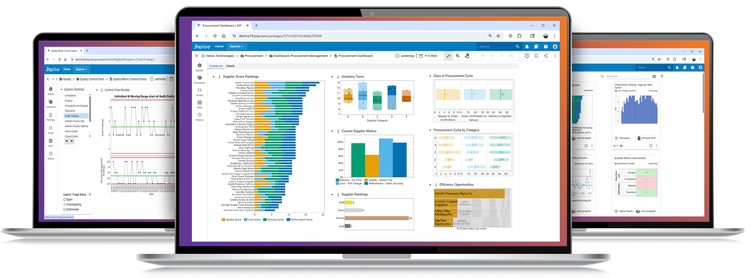
JMP Statistical Discovery is a statistical analysis and data visualization tool designed to help users explore data, identify patterns and relationships, and transform raw data into meaningful insights. The training focuses on practical data exploration and statistical analysis to support research, problem-solving, and data-driven decision-making. **What You Will Learn** • Understanding the principles of data exploration and statistical analysis using JMP. • Importing, organizing, and preparing datasets for analysis. • Exploring data through descriptive statistics and visualizations. • Identifying patterns, trends, and relationships within datasets. • Performing common statistical analyses using JMP. • Creating and interpreting charts and statistical results. • Applying statistical methods to real-world research questions. • Interpreting analytical results and communicating findings effectively. • Using JMP to support scientific research and data-driven decisions. **Practical and Final Project** Throughout the training, participants will work with real datasets and complete practical exercises to develop their data analysis and statistical interpretation skills. At the end of the training, each participant will complete an individual practical project involving the analysis of a dataset using JMP and the presentation of the main findings and insights.

consultant · pages.Trainer
Online · 3 · 2
Individual: 25000.00
pages.View Course

Specialities

Robotics

Automation and Control Engineering

Industrial Automation

Electrotechnics

Intelligent Control Systems

Embedded Systems

Industrial Computing

Electrical Machines

Electrical Engineering

Power Systems

Power Electronics

Smart Grids

Instrumentation and Measurement

Renewable Energy Systems

Autonomous Systems

Smart Manufacturing

Intelligent Automation